


AI + The Power of Ideas: From Stanford to Silicon Valley — The Impact on Tech Innovation

On a quiet campus in Northern California, a short drive from the venture capital offices of Sand Hill Road and the headquarters of some of the world’s most influential technology companies, a powerful engine of innovation continues to shape the global economy. That engine is Stanford University, an academic institution whose ideas, research, and entrepreneurial culture helped give birth to Silicon Valley and the modern technology industry.
For decades, Stanford has played a central role in transforming scientific research into world-changing companies. From semiconductors to artificial intelligence, many of the breakthroughs that define modern computing began as academic ideas in university labs before evolving into global businesses.
Today, the relationship between Stanford and Silicon Valley remains one of the most powerful innovation ecosystems in the world—an environment where research, venture capital, and entrepreneurship converge to accelerate technological progress.
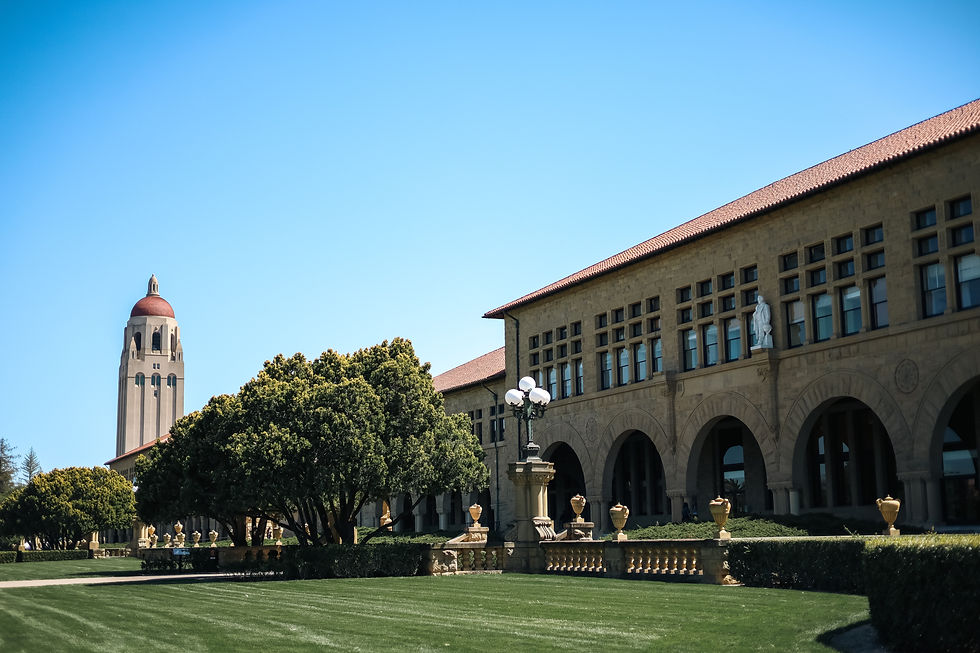
The University That Helped Build an Industry
The roots of Silicon Valley’s success trace back to the mid-20th century, when Stanford leaders made a bold decision to bring academic research and industry closer together.
One of the key figures in this transformation was Frederick Terman, an electrical engineering professor who encouraged his students to start technology companies instead of leaving California for jobs elsewhere. His vision was simple but revolutionary: universities should not only educate students but also help translate research into real-world innovation.
This philosophy led to the creation of the Stanford Research Park in 1951, one of the first university-affiliated technology parks in the United States. The park attracted early technology firms and created a collaborative environment where researchers and entrepreneurs could work side by side.
Over time, the area surrounding the Stanford campus evolved into what is now known globally as Silicon Valley—a region responsible for launching some of the most transformative companies in modern history.

Stanford’s Startup Legacy
Few universities have produced as many influential technology companies as Stanford. Students, alumni, and faculty members have founded companies that collectively generate trillions of dollars in economic value.
Two Stanford graduate students, Larry Page and Sergey Brin, developed the search algorithm that would become Google while working on a research project at Stanford in the late 1990s. Today, Google’s parent company Alphabet Inc. is one of the most valuable companies in the world.
Another Stanford connection helped build the global social media industry. Reed Hastings, a Stanford graduate, founded Netflix, which helped transform how audiences watch movies and television.
Other major companies with strong Stanford roots include Google, Snap Chat, Cisco Systems, NVIDIA, Yahoo!, and Hewlett-Packard.
According to Stanford research on its entrepreneurial ecosystem, companies founded by Stanford alumni have collectively generated more than $2.7 trillion in annual revenue and created millions of jobs worldwide. If Stanford-founded companies formed a single economy, it would rank among the largest economies in the world.

Venture Capital and the Stanford Effect
Stanford’s influence extends beyond startups and into the financial infrastructure that powers innovation.
Just a few miles from campus lies Sand Hill Road, home to many of the world’s most influential venture capital firms. These investors provide early-stage funding to startups emerging from Stanford’s labs and classrooms.
This close proximity between researchers and investors allows ideas to move rapidly from concept to commercialization. A Stanford student or professor can develop a new technology, pitch it to investors, raise millions in funding, and launch a company—all within the same regional ecosystem.
In recent years, venture capital investment in the Silicon Valley region has frequently exceeded $70 billion annually, supporting thousands of startups working on technologies ranging from biotechnology to artificial intelligence.
Artificial Intelligence and the Next Wave of Innovation
Today, one of the most important areas of Stanford research is artificial intelligence. The university is home to the Stanford Institute for Human-Centered Artificial Intelligence, often referred to as Stanford HAI, which focuses on ensuring AI technologies are developed responsibly and benefit society.
AI research at Stanford is influencing industries across the globe, including healthcare, robotics, climate science, and education.
Machine learning models developed in academic labs are now being used to detect diseases, analyze satellite imagery for environmental monitoring, and optimize supply chains for major global companies.
The global market for artificial intelligence is projected to grow rapidly, with estimates suggesting the industry could contribute more than $15 trillion to the global economy by 2030. Silicon Valley startups—many founded by Stanford researchers—are at the forefront of that expansion.

The Global Influence of Silicon Valley Innovation
The ideas born at Stanford rarely remain confined to academic journals. Instead, they spread rapidly into industries and governments around the world.
Technologies developed in Silicon Valley now power financial systems, transportation networks, communication platforms, and entertainment industries across the globe.
Companies founded in the Stanford ecosystem operate in hundreds of countries, employ millions of workers, and influence global policy debates about data privacy, artificial intelligence, and digital governance.
Governments increasingly look to Silicon Valley not only for innovation but also for guidance on how emerging technologies should be regulated and deployed responsibly.
Challenges of the Innovation Ecosystem
Despite its success, the Stanford–Silicon Valley innovation pipeline also faces criticism and challenges.
Some critics argue that the rapid commercialization of academic research can prioritize profits over long-term societal impact. Others raise concerns about the growing concentration of wealth and power within the technology sector.
The region also struggles with high housing costs and economic inequality. Silicon Valley is one of the most expensive places to live in the United States, with median home prices exceeding $1.3 million in many parts of the region.
These challenges have prompted debates about how the benefits of technological innovation can be distributed more equitably across society.

The Future of the Stanford–Silicon Valley Partnership
Despite these challenges, the partnership between Stanford and Silicon Valley continues to serve as one of the most influential drivers of technological progress in the world.
New research initiatives, interdisciplinary collaborations, and student-led startups continue to generate breakthroughs in fields such as artificial intelligence, quantum computing, biotechnology, and climate technology.
As the global economy becomes increasingly dependent on advanced technology, the ideas emerging from Stanford classrooms and laboratories will likely play an even greater role in shaping the future.
The story of Silicon Valley ultimately begins with a simple but powerful idea: that universities, entrepreneurs, and investors working together can transform research into innovations that change the world.
For more than seventy years, that idea has defined the relationship between Stanford and Silicon Valley—and it continues to shape the next generation of technological breakthroughs.


Comments